What the rules ask of you
Cleaning a building and clearing a drain both produce dirty water. Where that water ends up is regulated, and the property owner is the one who gets asked about it. We contain and collect what we use, dispose of it through a proper route, and give you a written record of every visit. That record is what answers the question when an inspector asks.
What the rules ask of you
Your storm drains feed the public system. The agency that operates that system has to keep pollutants out of it, and that obligation reaches private property through local ordinances and inspections. In practice you are expected to be able to show four things. Drainage structures on your property are kept clear and working Wash water and debris do not enter the storm drain What is removed leaves through a legitimate disposal route There is a record showing it was done The rules themselves are written regionally, not statewide, so the detail differs by county. See which board covers your property.
How we work on site
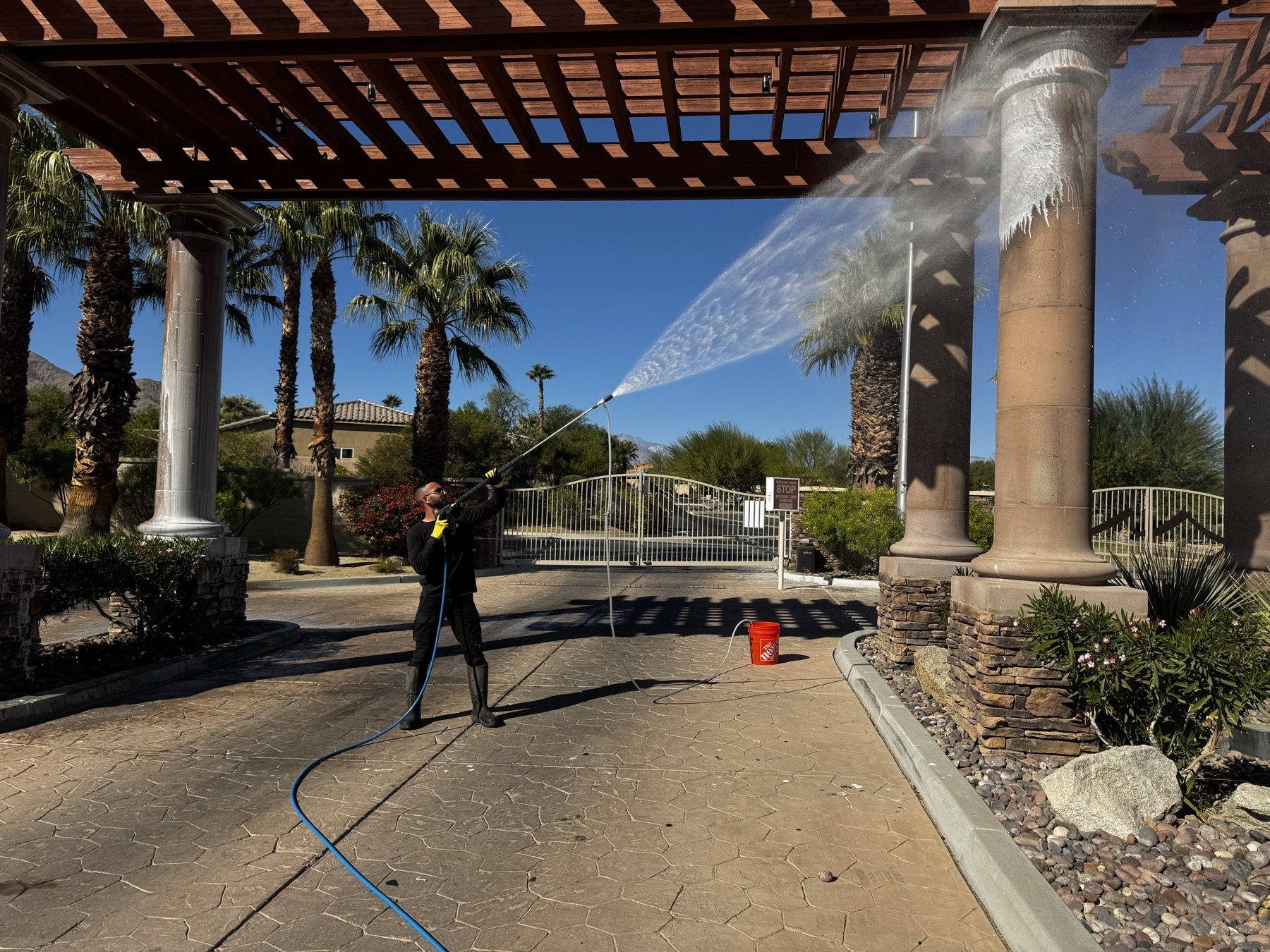
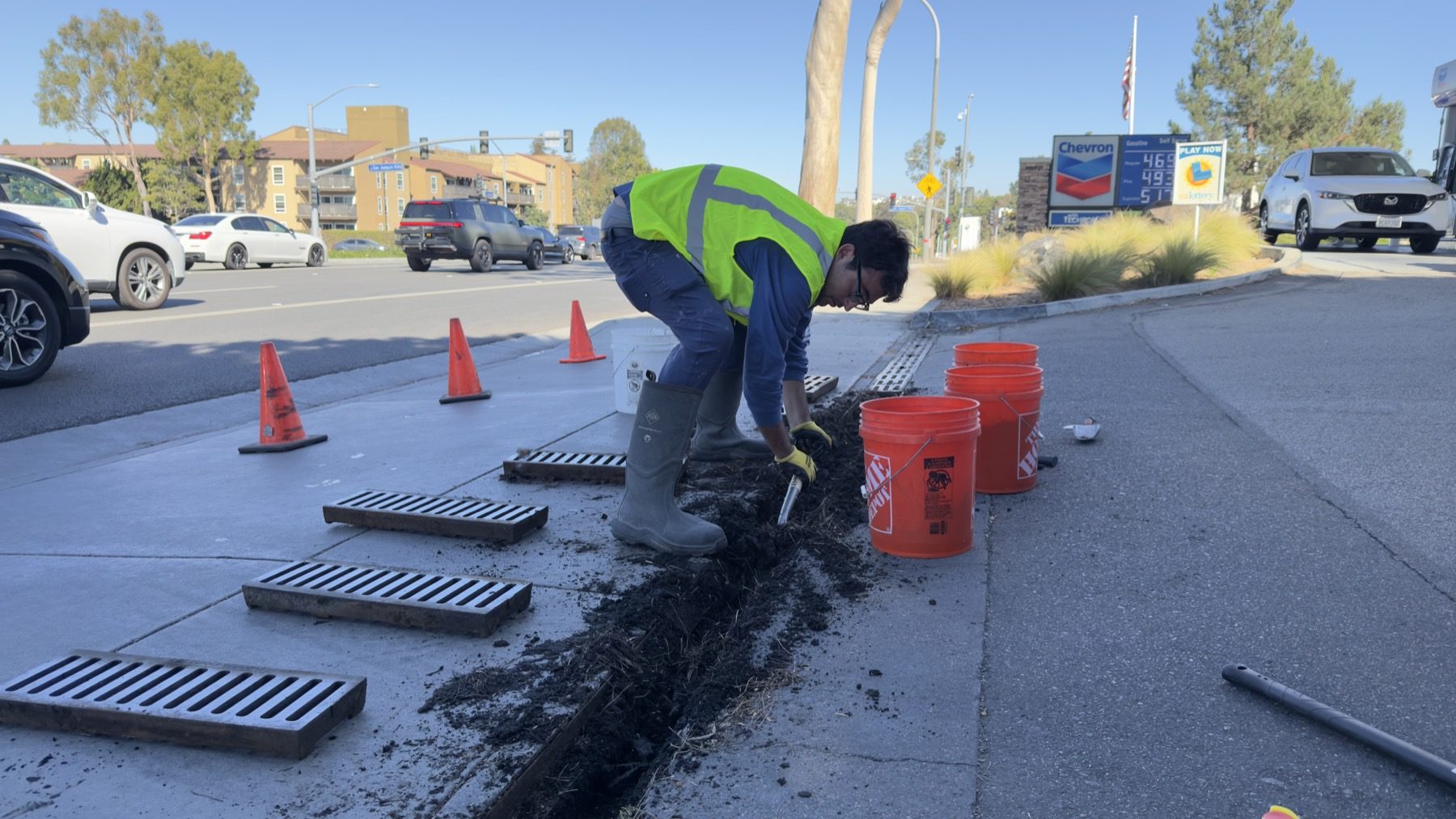
Four things happen on every job, whether it is a building wash or a drain clear. They happen in this order, because the order is what keeps material out of the drain rather than chasing it afterwards. Protect the drains first. Inlets are covered and sealed before any water is used. Sweep before washing. Loose debris is removed dry, so far less of it ends up in the water. Collect the water. Recovered with vacuum equipment rather than left to run off site. Dispose properly. Taken away through a legitimate route, never tipped on site or into landscaping.
What we use
The equipment and chemistry are chosen for the same reason as the sequence above: to keep the job from becoming a discharge problem. Biodegradable detergents that meet or exceed EPA (U.S. Environmental Protection Agency) Safer Choice criteria, selected for surface safety as well as environmental compatibility, so nothing is etched or stripped Reclaim-capable equipment and vacuum recovery that captures contaminated water at the point of use, cutting fresh water consumption by up to 60% against conventional open-hose surface cleaning Low-VOC sealants and traffic paints applied with masking and containment that isolates drainage zones from overspray Crews trained on runoff control and on the regional air-quality and stormwater rules that apply where they are working
Scheduled beats reactive
A schedule costs less than an emergency callout. Our crews set a cleaning interval around your traffic, your surfaces and your operating hours, then hold to it.
How a job runs, start to finish
Site Walkthrough
A supervisor walks the property with you and records surface types, square footage, drainage points, access hours and any existing damage.
Written Scope
You get a written scope within 24 hours naming the cleaning method for each surface, with a fixed price set against it. Nothing is scheduled until you approve it.
Scheduling
The work is booked into your operating hours, usually overnight or before opening, so parking, loading and foot traffic keep moving.
Work and Record
Our own crews do the work, with drains covered and runoff recovered, and you receive dated photographs and the disposal record afterwards.
What you get after every visit
Every visit produces a written record. It is short, and it is written to be handed to a regulator, an auditor or a landlord without editing. If your property sits in a vendor management system, the same record can be uploaded there. See what we supply for procurement and insurance onboarding.
Common questions
- What do BMP (Best Management Practices), MS4 (municipal separate storm sewer system) and NPDES (National Pollutant Discharge Elimination System) actually stand for? NPDES (National Pollutant Discharge Elimination System) is the federal permit system under the Clean Water Act. An MS4 is a municipal separate storm sewer system, meaning the public drain network your site connects to. BMPs are the Best Management Practices the permit requires, which is the specific list of things you are expected to do. In plain terms: the federal law sets the rule, the local agency holds the permit, and the practices land on you.
- Is a private commercial property really covered by this? Yes. The agency holding the MS4 permit is answerable for what arrives in its system, and it passes that obligation on to the properties that discharge into it, through local ordinance and inspection.
- What happens if we cannot show any records? That is usually the problem rather than the cleaning itself. Enforcement generally starts with a notice and a request for evidence of practice, so a site with photographs and disposal records is in a very different position from one with nothing.
- Are the cleaning agents safe around people, pets and planting? Yes. We use biodegradable detergents that meet or exceed EPA (U.S. Environmental Protection Agency) Safer Choice criteria, chosen for material safety as well as environmental compatibility. Sites stay usable, and we schedule around occupied areas regardless.
- How do you stop runoff reaching landscaping and planted areas? Drain inlets and planting beds are protected before any water is used, debris is swept dry first, and wash water is recovered with vacuum equipment rather than left to run. On sloped sites we work uphill to downhill so the collection point stays below the work.
- Do the rules change between counties? Yes. Southern California is split between several Regional Water Quality Control Boards, and each writes its own permit. We document to one standard that satisfies all of them, so a portfolio spanning counties keeps a single set of records.
What our clients say
“We had an issue with water draining in the trench drain and a clogged pipe preventing water to drain to the street at our dealership… Responsive, attended a last minute call, convenient to work with and makes sure you are satisfied.”
“I reached out to PowerWashCo last minute for drain cleaning services, and I couldn’t be happier with the outcome… Not only did they efficiently vacuum the hazardous oil residue and clear the flooded storm drain, they also pressure wash our gas station that night.”
“We needed our 7-11 gas station’s gas island and canopy cleaned, and we came across PowerWashCo on Google. After reading the reviews, I decided to take a chance on them, and I’m glad I did… I highly recommend PowerWashCo for your cleaning needs.”